Tharkian combat-based chieftaincy succession
A Princess of MarsTharkian combat-based chieftaincy succession makes demonstrated fighting prowess a basis for rank, office, and public honor. A victorious warrior may take the defeated chieftain’s metal and position, but advancement is not simply a matter of attacking anyone at will: council authority and rules of self-defense constrain challenges to senior leaders. John Carter’s unexpected ascent shows how quickly a kill can change his standing, while his later use of persuasion to support Tars Tarkas reveals that the custom’s political order can also be contested in council.
Rank, Combat, and Recognition
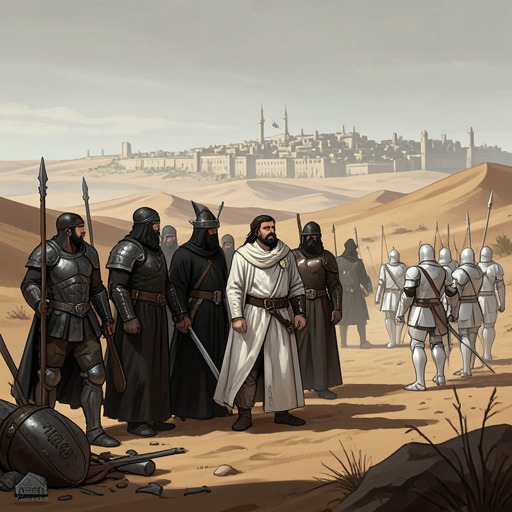
Among the Tharks, a warrior’s position is measured through promotions and kills. After John Carter’s first fight in the audience chamber, a warrior brings him the arms and ornaments of the opponent he killed. Carter realizes that these are not merely spoils: they are the dead man’s status made visible, and their transfer explains why the Tharks have treated him with unusual respect and freedom. By defeating the chieftain, Carter has, in effect, inherited the honors due a conqueror and become a Thark chieftain.
The standing attached to those possessions is legible to the community. Sola explains that the warrior whose metal Carter now wears had risen close to Tars Tarkas in rank through promotions and kills. Carter occupies eleventh place: only ten chieftains in the community outrank him. Some warriors address him as Dotar Sojat, joining the surnames of the two chieftains whose metal he has taken. The name turns his combat record into an identity others can recognize and use.
Limits on Advancement
The hierarchy grants Carter status without making him its uncontested head. He asks Sola what would happen if he killed Lorquas Ptomel, the community’s chieftain. She explains that such a victory would make Carter first, but only if the council wills that Lorquas Ptomel meet him in combat, or if Lorquas Ptomel attacks Carter and Carter kills him in self-defense. The distinction matters: a higher rank is attainable, yet the route to it is regulated by communal judgment or a recognized defensive right.
Tars Tarkas likewise distinguishes Carter’s present honors from his uncertain future among the Tharks. Until they reach Tal Hajus, Lorquas Ptomel orders that Carter be accorded the respect his actions have earned. But Tars Tarkas warns that Carter’s acceptance into the community depends on whether Tal Hajus considers him worthy of service. Each chief ranked above him is responsible for delivering him safely to the ruler. Combat has won Carter a chieftain’s standing, but that standing does not by itself settle his membership or protect him from the political authority above him.
The Rule in Practice
The audience-chamber incident shows how recognition follows action rather than intention. Carter had not known that his blow had killed his opponent; he learns this only when the dead warrior’s possessions are brought to him. The Tharks’ response makes the consequence clear: the defeated man’s metal passes to the victor, and the victor is treated according to the dead man’s position. Carter’s rise is thus an unintended result of combat, not a title he sought through a planned challenge.
The same world of combat rank regulates what counts as a permissible challenge. When Zad strikes one of Carter’s thoats, Carter understands that he must answer with a duel. Because Zad has drawn a longsword, Carter may meet him with that weapon or choose a lesser one, such as a short sword, dagger, hatchet, or his fists; he may not use a firearm or spear against Zad’s longsword. Carter chooses the same weapon as his opponent. The episode concerns the rules of combat rather than succession to a chieftaincy, but it shows how Thark standing is embedded in conventions that specify not only who may fight, but how a challenge may be answered.
From Personal Rank to Political Authority
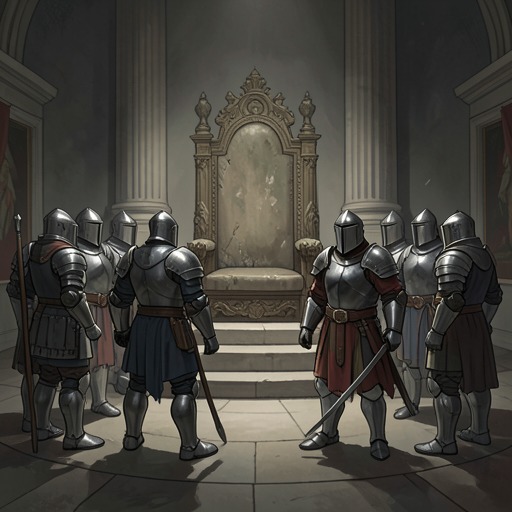
The custom’s logic becomes political when Carter argues before the Thark council that Tal Hajus has failed to meet the standard by which the Tharks claim to honor bravery. Carter contrasts Tal Hajus’s absence from the fighting with his treatment of defenseless people, then proposes Tars Tarkas as a worthy ruler. The council responds with deep applause. The scene shows that a leader’s authority is not presented as resting on title alone: it is vulnerable to public scrutiny of the courage and conduct that should justify it.
Yet the change of leadership is framed as something the council must command, not as a simple transfer of power by Carter’s declaration. His speech urges the assembled chieftains to require Tal Hajus to prove his fitness to rule, and the collective response supplies support for Tars Tarkas’s claim. Combat remains the foundation of the political standard, but rank and rule also depend on communal recognition. The system therefore combines individual prowess, regulated challenge, inherited-in-combat honors, and council judgment, making violence both a means of advancement and a measure by which leadership can be questioned.